


















Carpal Tunnel Syndrome Overview:
- Carpal Tunnel Syndrome is characterized by nocturnal paresthesia along the median nerve.
- Patients are often awakened at night due to pain and numbness along the median distribution (thumb, index finger, long finger, and radial half of ring finger).
- This pain resembles the loss of circulation to the hand and is commonly relieved by shaking or opening and closing of the fingers and hand.
- Patients commonly complain of weakness of the affected hand and loss of manual dexterity
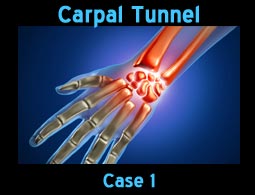
- Carpal Tunnel Syndrome is the most common entrapment neuropathy and is caused by compression of the median nerve along its course through the Carpal Tunnel distal to the wrist crease.
- The most common disease in differential diagnosis of Carpal Tunnel Syndrome is cervical radiculopathy (i.e. herniated disk in the cervical spine); however, these two entities may coexist in up to 70% of cases.
- Carpal Tunnel Syndrome can be diagnosed clinically. However, EMG and Nerve Conduction Study increase the diagnostic accuracy of this disease.
- Non-surgical management of Carpal Tunnel Syndrome includes rest, NSAIDs, and use of wrist splints.
- Patients who are refractory to conservative measures are good candidates for neurolysis of the median nerve at the wrist, which is an outpatient procedure.
Carpal Tunnel Syndrome Cases:
 |